
Showing posts with label health food. Show all posts

Friday, September 3, 2010

Soba is not Yakisoba

Wiki says it the best: "Even though soba (noodles made from buckwheat) is part of the word, yakisoba noodles are not made from buckwheat, but are similar to ramen noodles and made from wheat flour." So there you have it. They're both delicious, but Soba is going to be the next big thing because of all the health benefits and because of the different ways of preparing it.

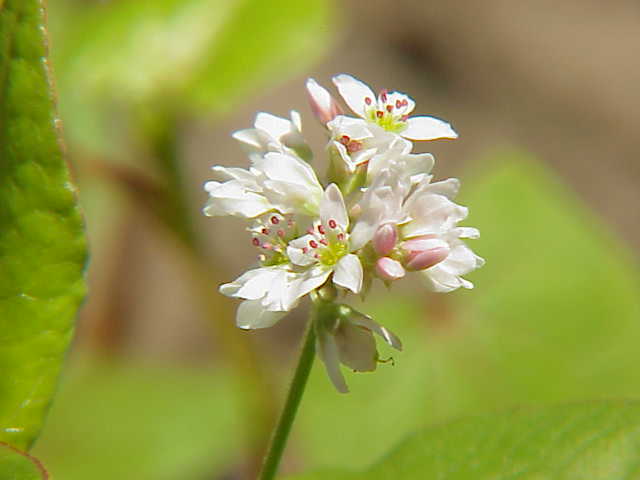
Most noodles are made from wheat flour and are very starchy, and stripped of over half of the nutrients in the wheat's natural state. I sometimes feel like it's a waste of eating if it weren't for the veggies, flavors, and other food enhancers around it. Now that I'm a starving student no more, I want more benefits from eating than just filler. I'm also meeting more and more people who can't eat pasta, udon, yakisoba, and other wheat and grain products. This is one "wheat" product that they might want to look into. Buckwheat are a fruit seed, not a cereal or grain. The name is just plain misleading. Health benefits include lowering cholesterol and high blood pressure, controls sugar levels, strengthens capillary walls, etc. but enough about that, now that you've heard there are benefits, let's get to ways of eating it.


The best way of eating it in the summer is COLD ZARU SOBA! No soup, but a dipping sauce with chopped green onions, and some wasabi on the side. The noodles come boiled and chilled with seaweed flakes on top. Many people enjoy this with tempura on the side. This would be called Ten Zaru. "ZARU" is the word for the bamboo dish that you see it on; it strains the water and ice the soba was chilled in.
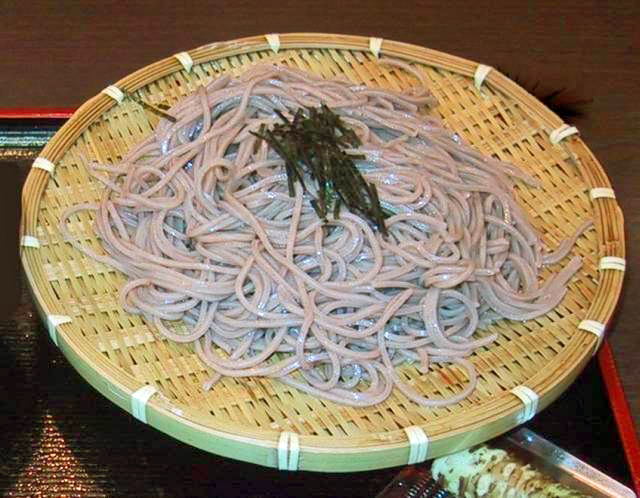


My favorite is the Yamakake Soba which has grated Yamaimo on top with a quail egg on top. Yamaimo is a type of yam, but it's quite slimy and is only recommended for adventurous foodies. But I didn't have any Yamaimo on the ready this day, so my summery dish came to look like this. Soba with flakes of seaweed, side of sliced cucumber with miso, side of chopped green onions and wasabi for the dipping sauce. I'm missing the zaru, but when else am I going to use it?


Other delicious ways of eating soba is in a hot soup. Of course there is Tempura Soba, then Kitsune (using fried, sweet soybean curd). In various regions of Japan, they have their own way of preparing Soba. When Japanese people travel, they make sure to eat the flavor of the region. Soba is a dish that is different in many regions in the way they prepare the dish, but also the way they make the noodle. If you're traveling Japan, make sure you find out what the specialties of that region are so you can always try the best food!

Sunday, August 22, 2010

Warabi Mochi

A subject of a big joke this month was Warabi Mochi, a summer treat in Japan you can't go without. Apparently there's a truck that goes around Osaka selling Warabi Mochi with the same tune of another street vendor jingle. No one else in that party heard it before, so as far as we're concerned, it's a phantom truck. But I guess according to wiki, I guess it's not uncommon? But I'll believe it when I see it.

This subject was brought up once at the izakaya, and again at a takoyaki party our friend brought as a joke and, of course, a delicious dessert. But there is nothing but love for Warabi Mochi. It's sweet, refreshing, and iconic as a summer Japanese treat. My cravings for sweets requires me to find healthier alternatives, and this is one of them. Warabi mochi being fat free and low in calories, with the kinako topping as a source of Vitamin B and protein. Naturally, I had to make some myself.


Basically, you mix the warabi mochi powder, water, and some sugar as directed on the package, and boil it till the mix is transparent, and hard enough to make balls with:


Have a large bowl of ice cold water ready, and when your mix is hard enough, take two spoons, scoop with one, and plop with the other into the ice cold water to harden and cool down. Repeat this till you've made all your balls:


Now, while your warabi mochi are cooling, get your kinako ready by mixing kinako powder, sugar, and a tiny pinch of salt. When you're ready for your snack, THEN roll your warabi mochi in the kinako to enjoy with some houjicha (my favorite).


Just a note, I took this as a snack to work WITH kinako on already, the kinako got so soggy, it wasn't the best taste...